
Help Them Plan, Play, and Remember Their Summer
Summer days can feel long when you have young children at home, but somehow the weeks still pass quickly. You want your young children to have time for boredom, imagination, and open-ended play, but you also want a few simple activities that help them stay off screens, enjoy childhood, and make memories they can actually remember.
That is where a summer bucket list can help. These summer activity ideas for kids are designed to give your family a simple rhythm for planning, playing, and remembering together. A printed list gives your child something to look forward to, something to help choose, and something to proudly cross off as the season unfolds.
Children often need help turning everyday experiences into lasting memories. If you have ever heard your child answer “nothing really” when someone asks what they did over the summer, you know how easily full days can blur together. Reviewing a bucket list, talking about favorite moments, and saving a few photos or small keepsakes can help those memories become easier for them to recall and retell. This simple practice helps children process what they experienced and begin turning everyday moments into long-term memories.
This process does not need to be complicated, and the idea isn’t to entertain your child every minute. The goal is to create small moments of delight, connection, and awareness that help them notice the story they are living this summer.
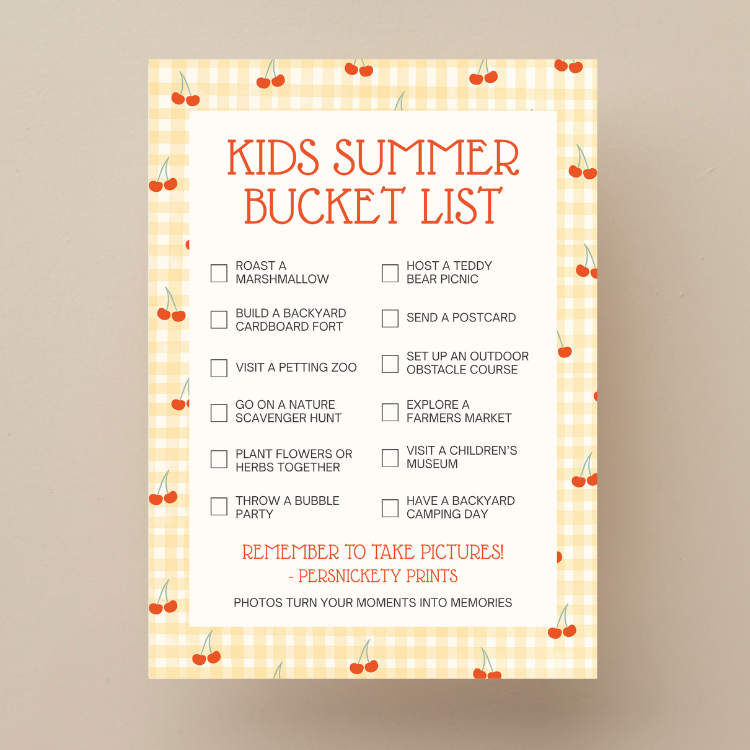
To make this easier, we’ve curated a kids summer bucket list with 12 activity ideas already included. It is a great option if you want a ready-made list with simple, playful activities that are realistic for families and fun for young children. You’ll find the digital download for this curated list later in the post!
How to Use a Summer Bucket List With Kids
Start by placing the bucket list somewhere your child can see it. The fridge, a family command center, a playroom wall, or the inside of a summer journal can all work well. When the list is visible, your child can begin to recognize it as part of the rhythm of summer.
If it works with your schedule – let your child help choose what comes next. Even young children can point to an activity, choose between two options, or help gather supplies. This gives them a sense of ownership and autonomy.
Review the list often. After an activity, cross it off together and ask simple questions like, “What was your favorite part?” or “What do you want to remember about today?” These small conversations help children practice reflection, storytelling, and gratitude.
Summer Activity Ideas for Kids: 12 Bucket List Ideas to Try
- roast a marshmallow
Roasting a marshmallow is a small activity that can feel magical to a child. You can do it around a campfire, over a backyard fire pit, or even at a grill in a local park. Keep the setup simple. Use the moment to practice fire safety, and let your child experience the fun of waiting, watching, and carefully making their own treat.
2. Build a backyard cardboard fort
A cardboard fort is the kind of low-cost activity that can turn into hours of imaginative play. Use large boxes outside if you have the space, or build indoors in a spot where the fort can stay up for a little while. Children can help choose the layout, decorate the walls, add blankets, and turn it into a house, castle, rocket ship, store, or secret hideout.
3. visit a petting zoo
A petting zoo gives children a chance to slow down, observe animals, and interact with the world in a hands-on way. If the petting zoo is connected to a farm, you can also point out fruits, vegetables, gardens, or farm equipment. Try to choose a day that is not too hot so both your children and the animals can have the best experience possible.
4. go on a nature scavenger hunt
A nature scavenger hunt turns a regular walk into an adventure. You can look for leaves, flowers, rocks, birds, bugs, sticks, colors, or textures along your neighborhood route or a new trail. For a simple memory-making addition, wrap tape loosely around your child’s wrist with the sticky side out and let them make a nature bracelet with small leaves and flowers they find along the way.
5. plant flowers or herbs together
Planting flowers or herbs gives your child something to care for and revisit throughout the summer. They can help scoop soil, sprinkle seeds, water the plant, and notice how it changes week by week. If your child enjoys drawing, create a simple plant journal where they sketch what they see and you write down their observations in their own words. For small hands, we recommend the smaller Field Note journal size.
6. throw a bubble party
A bubble party is easy to set up and full of movement, laughter, and sensory play. You can use store-bought bubbles, make DIY bubble wands, or try oversized bubbles in the yard. This is a great activity for a warm day because children can run, chase, splash, and cool down a little without needing an elaborate plan.
7. host a teddy bear picnic
A teddy bear picnic makes an ordinary lunch feel special. Let your child load their favorite stuffed animals into a wagon, choose a blanket, and help pack simple snacks or sandwiches. Afterward, you can extend the activity by giving the stuffed animals a “bath” in a laundry basket or tub, which adds another layer of pretend play and practical cleanup.
8. send a postcard
Children love receiving mail, and sending a postcard helps them understand that communication can be thoughtful, personal, and worth waiting for. Coordinate with grandparents, cousins, friends, or neighbors so your child can send and receive mail throughout the summer. For extra flair, design and print enough custom postcards to last the season. Let your child draw a picture, dictate a message, add the stamp, and place each postcard in the mailbox themselves.
9. set up an outdoor obstacle course
An outdoor obstacle course is a great way to help children burn energy with items you already have. Use cones, pool noodles, rope, chairs, hula hoops, chalk, or painter’s tape to create places to jump, crawl, balance, toss, and run. You can make it as simple or elaborate as your energy allows, then let your child repeat it, change it, and time themselves.
10. explore a farmer’s market
A farmer’s market is a gentle way to introduce children to new foods, colors, smells, and community spaces. You can see how many fruits and vegetables they can name, let them choose one new food to try, or talk about where food comes from. For children who are cautious eaters, simple exposure can help unfamiliar foods feel more approachable over time.
11. visit a children’s museum
A children’s museum is a helpful option for very hot days, rainy afternoons, or weeks when you need an outing that is already designed for hands-on play. Children can explore, build, pretend, experiment, and move through exhibits at their own pace. To keep the effort manageable, pack snacks, plan around nap time, and choose one or two areas to enjoy deeply instead of trying to do everything.
12. have a backyard camping day
A backyard camping day can give children the feeling of adventure without the logistics of a full camping trip. Set up a tent, blow up an air mattress, bring out flashlights, read camping-themed books, and see how long everyone wants to stay outside. You may discover that your child loves the adventure, or you may all still end up sleeping indoors. Either way the memory still counts!
Download the Kids Summer Bucket List
If you want a ready-made list to use with your child, download the kids summer bucket list with these 12 ideas already included. It is a simple way to give your child something visual to follow, review, and cross off throughout the summer. The download is available in two sizes:
as a 5×7, which perfectly fits into an A5 journal
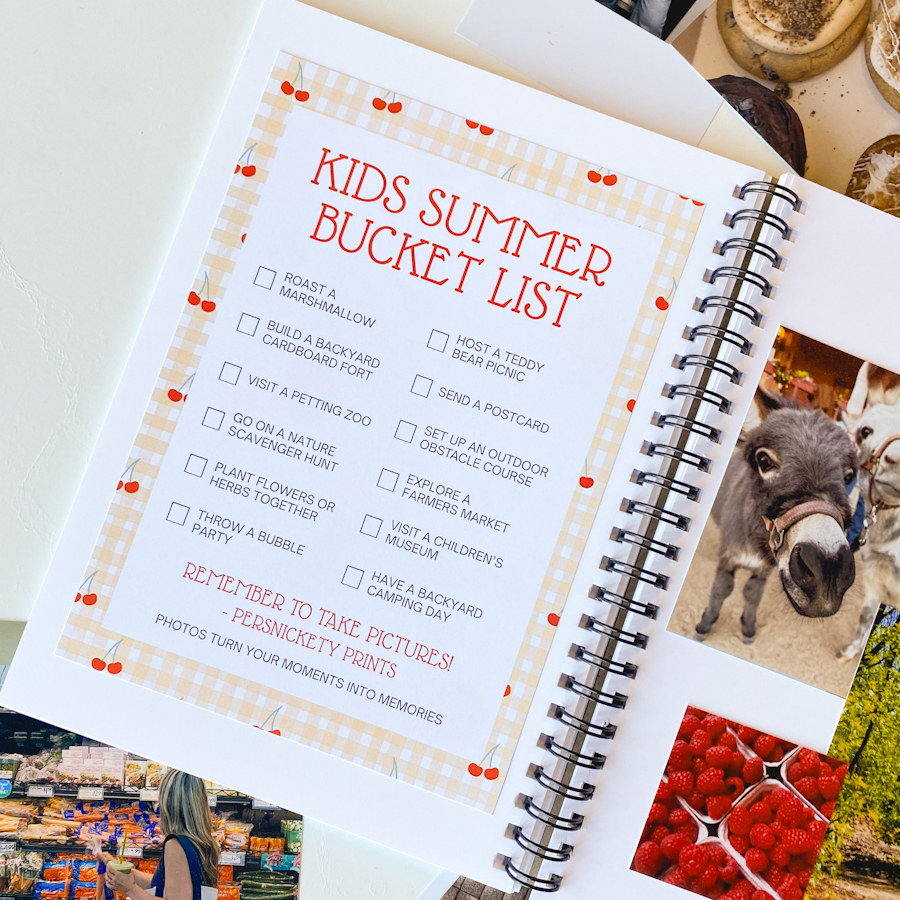
as a 6×8, which works well in an A4 journal
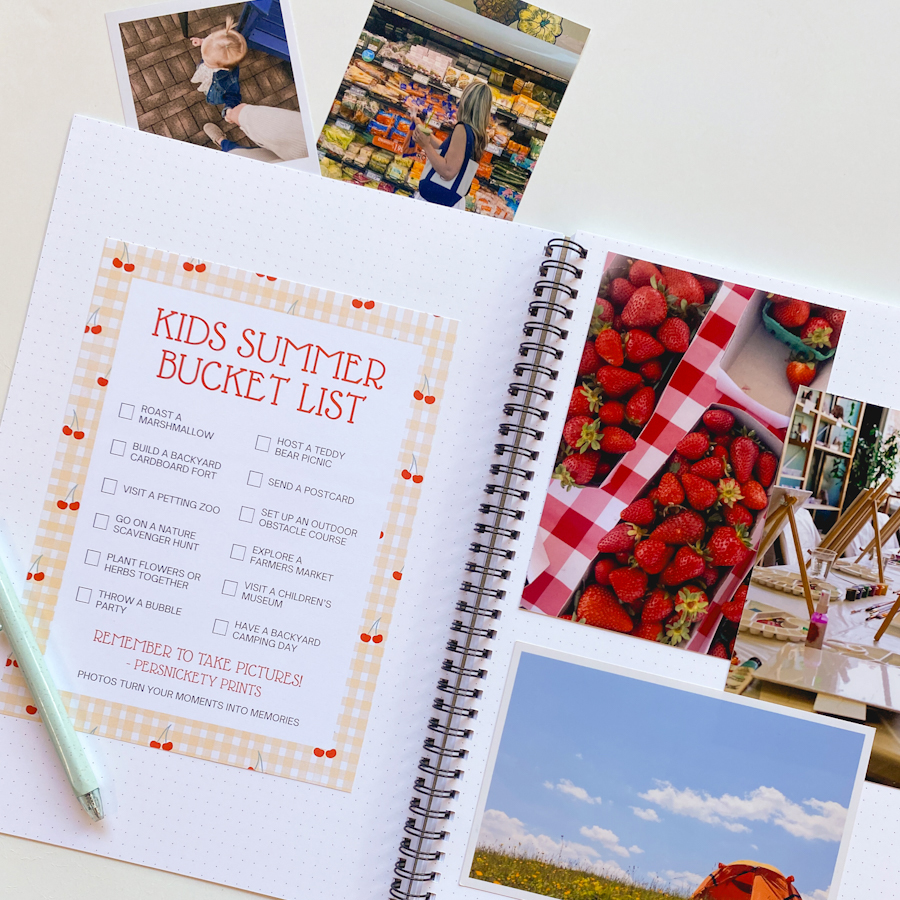
Want to Personalize It? Try a Blank Summer Bucket List
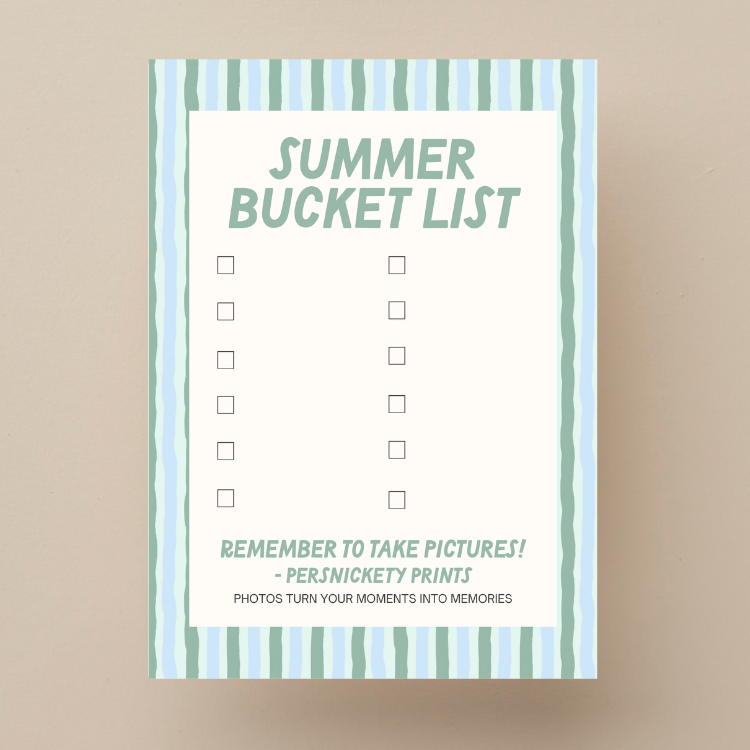
You may already have a clear vision for your summer. Maybe you have swim lessons, library days, family visits, camping trips, or a few local events already on the calendar. In that case, this customizable bucket list download with 10 blank spaces can help you turn those plans into something your child can see, anticipate, and remember.
As you plan your summer activities, consider the concept of “anchor” activities. These are the simple routines or special plans your child can look forward to throughout the season, like going to the pool every Friday, visiting the library once a week, playing outside after dinner, or choosing one bigger activity to do together each weekend.
If possible, let your child help choose a few of these anchors. Even if the activities are already scheduled, the practice of adding them to a printed list, reviewing them together, crossing them off, and talking about what happened can help your child feel more involved and remember the experience more clearly.
Keep the rhythm simple. You do not need to fill every moment or plan something elaborate every day. The goal is to create small anchors of fun, connection, and memory that give your summer shape while still leaving room for rest, boredom, and imaginative play.
Use the suggestions below if you want to add a few more ideas that fit your child, your home, and your season of life.
More Summer Bucket List Ideas by Interest
For kids who already have a sense of what they want from their summer — pick the category that fits their interests.
For the Child Who Loves Water Play
- Run through the sprinklers. This is one of the easiest ways to turn a hot afternoon into a memory.
- Make sponge water bombs. Cut sponges into strips, tie them together, and let kids toss them into buckets or at safe targets.
- Set up a water table with cups, funnels, and scoops. Even simple pouring and scooping can hold a young child’s attention for a long time.
- Create a backyard toy car wash. Fill a bin with soapy water, hand over a sponge, and let your child wash toy cars, trucks, or outdoor toys.
- Play with water balloons. Keep the setup small if you want less cleanup, and have children help gather balloon pieces afterward.
- Make an ice cube sensory bin. Add ice cubes, water, spoons, cups, and small toys for a cool sensory activity on a warm day.
For the Child Who Loves Making and Creating
- Finger paint outside. Outdoor painting makes the mess easier to manage and gives children more freedom to explore.
- Collect rocks and paint them. Children can turn rocks into animals, patterns, garden markers, or little gifts for neighbors.
- Make handprint or footprint art. This is a sweet way to document their size and stage during this particular summer.
- Make homemade playdough. Let children help measure, mix, knead, and choose colors or scents.
- Make paper plate suns. This is an easy craft for a quiet afternoon and can be adapted with paint, crayons, tissue paper, or yarn.
- Draw with sidewalk chalk. Create hopscotch, roads for wagons, obstacle paths, or a giant mural together.
For the Child Who Needs a Little Adventure
- Go berry picking. It gives children a job, a snack, and a reason to notice how food grows.
- Feed ducks at a pond. Bring appropriate food if allowed in your area, and use the outing to practice gentle observation.
- Go on a bug hunt. Look under rocks, around flowers, or along sidewalks, then talk about what you find.
- Attend a hot air balloon festival. If there is one near you, it can feel magical for children who love big sights and new experiences.
- Go on a color hunt around the house or yard. Choose one color at a time and see how many matching items your child can spot.
- Get ice cream from the ice cream truck. Sometimes the simple novelty of hearing the music and choosing a treat becomes the memory.
For the Child Who Loves Pretend Play
- Have a pajama movie morning. Let everyone stay cozy, make a simple breakfast, and watch a favorite movie before the day gets busy.
- Play dress-up with summer costumes. A fairy day, explorer day, beach day, or camping day can turn regular play into a themed adventure.
- Set up a lemonade stand. For young children who aren’t ready to take on the task of budgeting and selling the drink, let them give it away to neighbors or anyone who passes by.
- Have a dance party with summer songs. Create a short playlist with songs that talk about sunshine and nature then let your child move, perform, and be silly.
- Plan an outdoor movie. Bring pillows, blankets, and snacks outside, even if the movie is watched on a laptop or tablet.
For the Child Who Likes Little Experiments
- Play “sink or float” with household items. Fill a bin with water, choose safe objects, and let your child guess what will happen.
- Make a bird feeder. A simple pinecone, peanut butter substitute if needed, and birdseed can help children notice birds in the yard.
- Mix a summertime punch. Let your child squeeze the citrus, stir, taste, and adjust the sweetness.
- Make a sensory bin with rice, beans, or pasta. Add scoops, cups, small toys, or letters for open-ended play.
- Play with kinetic sand or regular sand. This is a calming activity for children who like scooping, shaping, and building.
- Make homemade popsicles. Blend fruit, juice, yogurt, or smoothies, then freeze them for a treat they helped create.
For the Child Who Loves Books and Quiet Moments
- Read books outside under a tree. A familiar book can feel new when read on a blanket in the shade.
- Visit the library for story time. Many libraries offer larger summer programs, crafts, performers, or reading challenges.
- Create a summer reading basket. Keep a few books in an easy-to-reach spot so quiet time feels inviting.
- Bring books into the tent. Camping-themed books are especially fun during a backyard camping day or when playing inside a fort.
- Draw a picture from the day. After an activity, invite your child to draw what they remember most.
- Tell the story back together. Ask, “What did we do first, next, and last?” to help your child practice memory and sequencing.
Make Reviewing the List Part of the Memory
The list is not just for planning. It can become part of how your child remembers the summer.
Choose a simple review rhythm that works for your family. You might check the list every Sunday night, after dinner, or at the end of each activity. Cross off what you completed, talk about what you enjoyed, and decide what you might want to do next.
Keep the questions simple. Ask your child what they saw, what made them laugh, what felt new, or what they would want to do again. For younger children, you can write down their exact words. Their phrasing often becomes one of the sweetest parts of the memory.
Let them help document it. They can place a sticker on the bucket list, draw a picture, choose a photo, save a postcard, or tuck a small paper keepsake into a pouch. These little rituals teach children that their experiences are worth noticing and preserving.
Be Intentional With Making and Preserving Memories
Memory keeping does not have to be complicated. Children grow quickly, and their interests can change even within a month or two. A favorite stuffed animal, a favorite snack, a favorite park, or a funny phrase may feel ordinary now, but those details often become the memories you treasure later.
Teach the practice of being mindful
You can help your child notice what they are doing, talk about how it felt, collect small reminders, and revisit the memories again. This helps them understand that summer is not just something that happens to them. It is a story they are living.
Create a summer treasure pouch
Use a pencil pouch, envelope, or small box to hold little items from the season, such as postcards, leaves, ticket stubs, drawings, pressed flowers, or notes. Some children will love having a special place to keep their tiny treasures.
Make a simple summer scrapbook
This can be a photo journal, a small album, or a few printed photos added to a notebook. You can work on it weekly, monthly, or once at the end of summer. Let your child choose favorite photos, dictate captions, or decorate the pages.
Help them play with photography
If you have an older child, consider letting them experiment with an old digital camera or child-friendly point-and-shoot camera. Children see the world differently, and their photos can become a sweet record of what mattered to them.
Review the bucket list at the end of summer
Sit down together and look at what you completed. Ask your child what they remember, what they loved, what surprised them, and what they would want to do again next year.
Helping Your Child Build Summer Memories
Your summer does not need to be full of elaborate outings to be meaningful. Children often remember the simple things: sticky marshmallow fingers, bubbles floating across the yard, a tent in the grass, a postcard in the mailbox, or the first tomato they helped grow.
Give them small ways to participate. Let them choose, help, cross things off, draw what happened, and tell the story back to you. These summer activity ideas for kids are not just about keeping children busy. They are about helping them become more mindful, more aware, and more connected to the memories they are making.
Summer will be over before you know it! A thoughtful bucket list can help your child notice the fun, remember the details, and hold onto the story of this season.
Ready to preserve your summer memories?